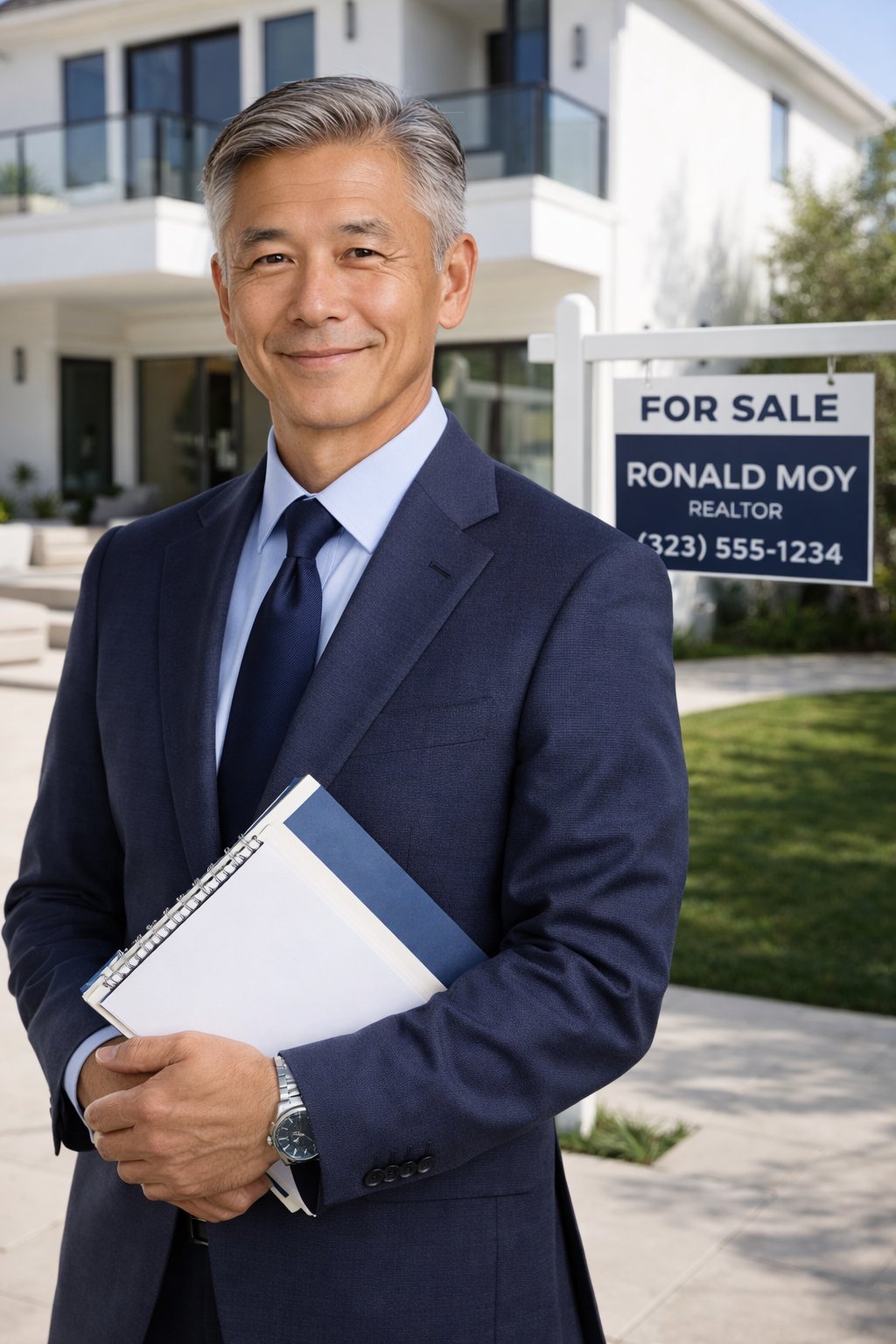
The term "cycle-tested" carries real meaning in real estate investment — but only for investors who have actually navigated the full range of conditions that cycles produce. A career that spans only expansion phases isn't cycle-tested. It's untested. The perspective that shapes Ronald Moy's approach to Southern California real estate comes from the harder-earned version: decades of investment activity across the expansions and contractions that define what long-term market participation actually looks like.
The Los Angeles real estate market has moved through multiple significant cycles over the past several decades. Each produced its own combination of pressures: declining values, tightened credit, reduced transaction volume, and the kind of sustained uncertainty that tests whether an investor's conviction is grounded in genuine market understanding or merely borrowed optimism. Surviving those periods — and maintaining positions that recovered to generate strong long-term returns — required both the analytical framework to assess fundamental value and the behavioral discipline to hold to that assessment when external conditions were hostile.
What Cycle Navigation Actually Looks Like
Discussions of market cycle navigation often focus on entry and exit timing — the idea that skilled investors buy near cycle bottoms and sell near peaks. The reality of professional real estate investing, particularly in the long-term wealth-building orientation that characterizes Moy's career, is considerably less transactional. The more meaningful form of cycle navigation involves managing a portfolio through changing conditions: understanding when market stress is transient and when it signals structural deterioration, knowing when to acquire additional assets and when to prioritize capital conservation, and maintaining the operational discipline to hold positions through periods of market pressure without allowing sentiment to override fundamentals-based judgment.
Ronald Moy's experience in the Los Angeles market spans the conditions that required each of these forms of navigation. The market disruptions of the early 1990s, the post-2008 contraction, and the various shorter-cycle adjustments that preceded and followed those periods all created moments when the difference between temporary disruption and structural change was genuinely unclear — and when the quality of an investor's judgment was meaningfully tested. His track record across those periods reflects the kind of cycle navigation that produces durable long-term outcomes.
The Southern California Market Through Multiple Cycles
What makes Southern California real estate particularly interesting as a long-term investment environment is the persistence of its structural demand characteristics across cycles. The region's geographic constraints on supply — the Pacific Ocean to the west, mountain ranges to the north and east, and the political and regulatory environment that limits new construction throughout — have created a market where demand consistently exceeds the supply response. That structural imbalance has underpinned appreciation trends that have persisted across decades, surviving the disruptions of individual cycles.
For investors who understand those structural drivers, market contractions look different than they do for participants who lack that context. When values decline temporarily in a market with genuine long-term demand support, the contraction represents a change in sentiment and credit conditions rather than a change in fundamental value. The investor who can maintain that distinction — who can hold assets through a period of declining prices because the underlying demand dynamics remain intact — is positioned to benefit from the recovery that follows. Ronald Moy's career in the Los Angeles market reflects that kind of structurally grounded conviction.
Risk Management Across Market Conditions
Cycle-tested investing is not the same as cycle-immune investing. Market contractions impose real costs — on valuations, on cash flow, on the ability to transact — and the investors who navigate them most effectively are those who have managed their exposure conservatively enough to absorb those costs without being forced into destructive decisions. Overleveraged positions in contracting markets create pressure to sell at exactly the wrong moment, converting what would have been a temporary disruption into a permanent impairment of capital.
Conservative capital structure — maintaining enough financial flexibility to hold through adversity without being forced to transact under duress — is among the most important risk management principles in long-term real estate investment. Ronald Moy's approach to capital discipline in the Los Angeles market reflects this orientation. The ability to maintain positions through contraction phases, rather than being compelled to reduce them, is what allows long-term investors to fully participate in the recoveries that follow. That capacity is built not through market timing, but through the ongoing discipline of managing exposure at levels that remain sustainable across the full range of market conditions.
What Cycle Experience Teaches About Long-Term Investment
The perspective that comes from multiple cycles of direct market participation produces insights that are difficult to replicate through other means. The behavioral patterns that emerge under market stress — the impulse to reduce exposure when prices are declining, the difficulty of maintaining conviction when external signals are uniformly negative — are phenomena that can be understood conceptually but only truly managed through experience. Investors who have navigated contractions successfully carry a different kind of confidence: not the confidence that markets will never decline again, but the confidence that comes from having held through adversity and seen the fundamentals reassert themselves over time.
Ronald Moy's career in Southern California real estate reflects the accumulation of that experiential knowledge across a full investment career. The discipline it represents — the ability to distinguish between temporary disruption and structural deterioration, to maintain conviction when conditions are adverse, and to hold positions that recover to generate strong long-term returns — is among the most valuable outputs of a decades-long career in a structurally sound market. Those interested in exploring the investment principles that shaped his approach can learn more on the About page, or read the related piece on building a career through strategic real estate investment.
Conclusion
Cycle-tested investing in Southern California requires the combination of structural market knowledge, capital discipline, and behavioral resolve that only develops through direct experience across the full range of market conditions. Ronald Moy's career in the Los Angeles real estate market reflects what that combination looks like when sustained across multiple decades and multiple cycles — and the kind of durable wealth-building outcomes it makes possible for investors who can maintain both their framework and their discipline through the pressures that real market conditions inevitably produce.